
Job Losses and Profit Shifting at DP World: How Automation Threatens Australia’s Economic Wellbeing
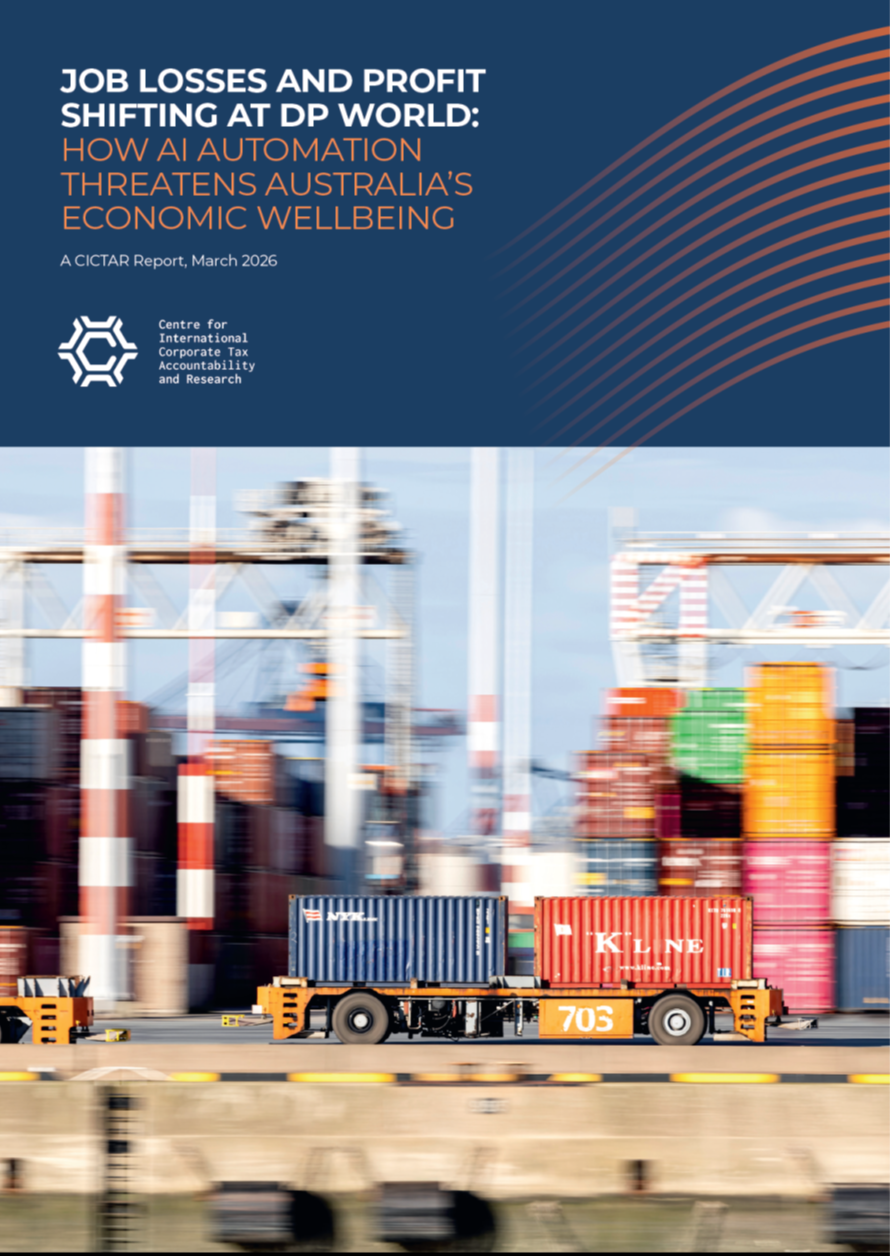
This report, developed in partnership with the Maritime Union of Australia (MUA), examines the finances of global port operator DP World which handles nearly 40% of Australia’s containerised imports and exports through its terminals in Sydney, Melbourne, Brisbane and Fremantle.
Despite a decade of revenue and profit margin growth from higher fees paid by Australian businesses and apparent compliance with current Australian tax rules, its contribution to Australia’s tax base has been severely lacking.
For more than a decade DP World paid no corporate income tax. Workers’ wages and the taxes they pay, nearly $70 million in 2025, are the primary source of DP World’s economic contribution to Australia. DP World is now attempting to embark on an ambitious AI automation programme that could threaten up to a thousand jobs or over 60% of the wharfie and maintenance workforce. These are well-paid, unionised roles that underpin household incomes, local communities, support for local businesses, and public revenue at federal and state levels.
DP World’s financial practices, its reliance on landside charges to fuel profit growth while raising consumer prices, and the looming social and fiscal impacts of its AI automation agenda provide clear examples of major problems that must be addressed. As well as examining these problems in detail, the report provides a number of recommendations for reform.
DP World and CDPQ were provided with the key findings and allegations in advance of publication. Some of the text in the report has been altered in response and the full responses are available here and through the link provided below.