
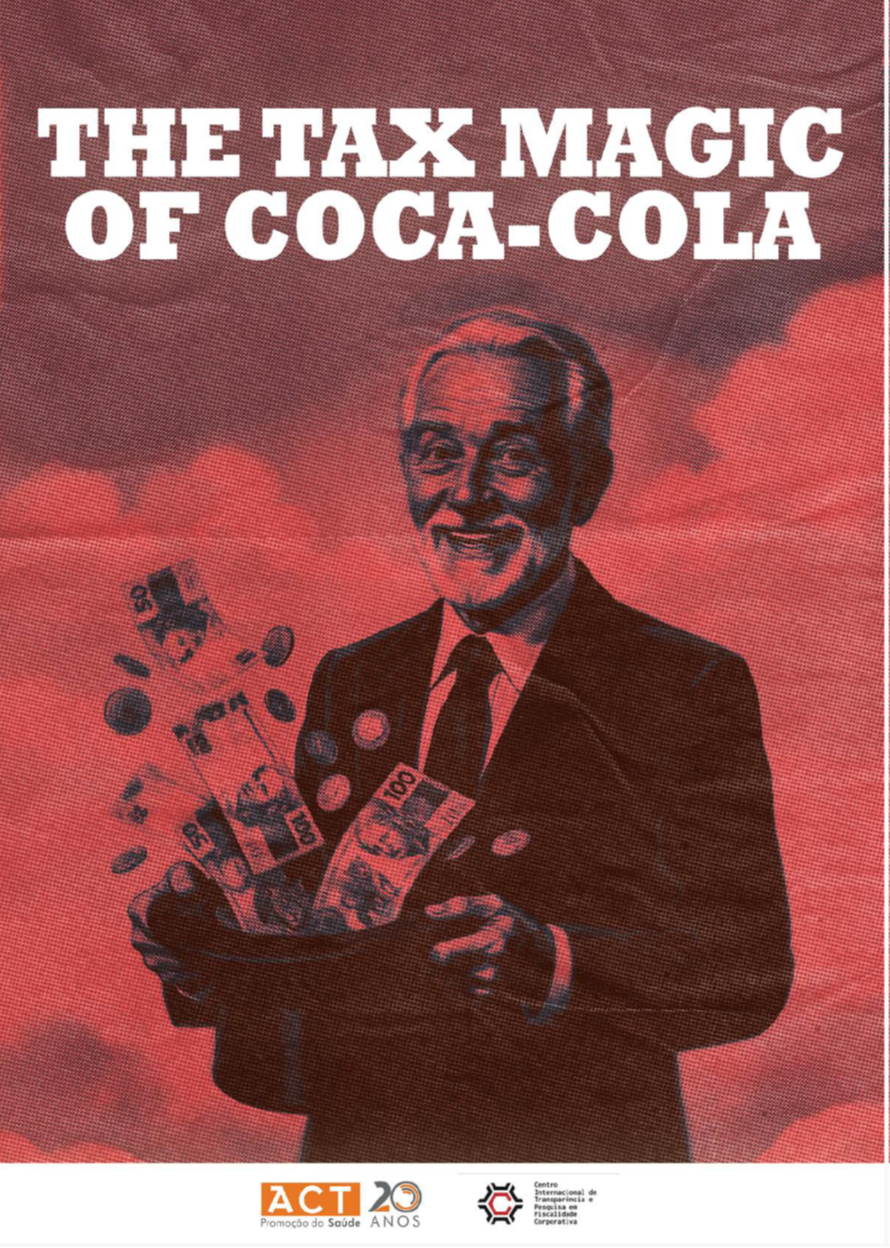
The Tax Magic of Coca-Cola
TAMBÉM DISPONÍVEL EM PORTUGUÊS
Coca-Cola, with annual global revenues of $US 47.1bn in 2024 is the largest beverage corporation in the world. This report reveals a global pattern of tax aggressive behaviour by Coca-Cola, which penalises governments worldwide and benefits billionaire investors.
The report specifically analyses the case of Brazil, based on new tax incentives data made available by the Brazilian Tax Revenue Agency, and draws parallels with similar cases around the world.
The report concludes that, not only does Coca-Cola sell unhealthy products, increasing public health costs, but it also reduces its responsibility to contribute to a fairer and healthier society through a tangle of tax schemes.
The report examines how Coca-Cola makes extensive use of tax havens in its corporate structure, such as Singapore, Guernsey, the Cayman Islands, Luxembourg, the British Virgin Islands, Cyprus, and Switzerland, potentially helping to reduce its tax obligations.
Beyond tax havens, Coca-Cola frequently relies on disguising royalties for the use of its brand by the company’s bottlers and subsidiaries, a strategy dubbed phantom royalties in this report. It would seem that Coca-Cola is giving away its brand—the world’s most valuable beverage IP, estimated at US$12.5 billion by the company in 2025—free of charge to companies to bottle and sell its products, many of them independent companies. But in reality, it may be using its close connections with these companies to disguise royalty payments in order to avoid its tax obligations.
The report also highlights Coca-Cola’s ‘Magic Cashback’, a mechanism which takes advantage of exemptions in the Manaus Free Trade Zone, allowing, in addition to the tax incentives, hundreds of millions of reais to be passed along to bottling companies as tax credits every year. This occurs because bottling plants outside the ZFM can obtain tax credits for the purchase of concentrates within the ZFM, even if the manufacturer paid no tax due to the tax incentive.